


Every few days or months, we get news that a new AI tool or website has launched, and what we can do with it. As a developer, we have to learn it and adapt it. So, from all the AI tools in this series, we have selected Claude.
In this series, we will discuss about Claud AI. Claude is different — it is the one that keeps getting talked about, and for good reason.
If you have heard the name but are not sure what Claude actually is, that makes it different from ChatGPT, or whether it is worth your time, this guide answers all of that. No hype. Just a clear, honest walkthrough from my experience who uses it every day.
By the end of this article, you will know exactly what Claude AI is, which version to use, how to get started for free, and what it can actually do for you.
What Is Claude AI?
Claude is an AI assistant made by Anthropic, a company founded in 2021 by former OpenAI researchers, including Dario Amodei and Daniela Amodei. The name ‘Claude’ comes from Claude Shannon, the mathematician who founded information theory.
At its core, Claude is a large language model (LLM) — the same category of AI as ChatGPT, Gemini, and Llama. You talk to it in plain English (or any language), and it responds. You can ask it to write, explain, summarise, code, analyse, brainstorm, translate, or anything that involves working with language and ideas.
Claude was trained with something Anthropic calls Constitutional AI, which teaches Claude to be helpful, harmless, and honest as core principles. It is not trying to be the AI that tells you what you want to hear. It is trying to be genuinely useful.
Claude Models: What Is the Difference?
Claude is a family of models, each built for different situations. As of 2025, the current generation is the Claude 4 family.
| Model | Best For | Speed | Context Window |
|---|---|---|---|
| Claude Haiku | Fast tasks, simple questions, high-volume API use | Fastest | 200K tokens |
| Claude Sonnet 4.6 | Everyday use, coding, writing, analysis — the balanced choice | Fast | 1M tokens (beta) |
| Claude Opus 4 | Complex reasoning, research, long documents, deep analysis | Slower | 200K tokens |
For most people starting, Claude Sonnet 4.6 is the one you will use 90% of the time. It strikes the right balance between intelligence and speed.
How to Access Claude: Free vs Paid Plans
You can access Claude at the claude.ai website. It runs in the browser. The good news is that it is available as a mobile app for iOS and Android. Also, has a desktop application for Windows and macOS.
| Plan | Price | What You Get | Best For |
|---|---|---|---|
| Free | $0/month | Claude Sonnet with daily usage limits | Trying it out, casual use |
| Pro | $20/month | 5x more usage, all models, Projects, priority access | Daily users, developers, writers |
| Max | $100-200/month | Highest limits, extended thinking, Claude Code | Power users, heavy developers |
| Team | $30/user/month | Pro features + collaboration, admin controls | Teams and companies |
The Claude Interface:
On the claude.ai homepage, there is a message input window with a model selector option and a left sidebar with conversation history.
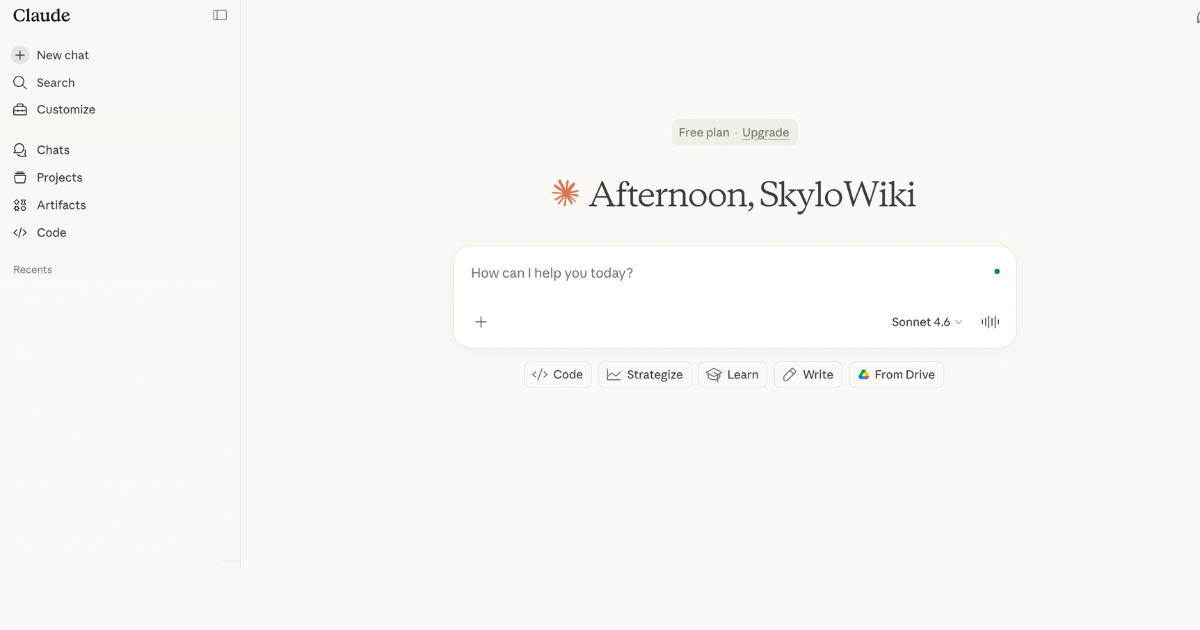
Key parts of the interface:
- Message box:
- Here, you can type anything, or you can also drag and drop files directly.
- After adding information in the textbox, you need to click on the arrow button to submit the message.
- Model selector:
- Cluade.ai provides multiple models.
- You can choose between Haiku, Sonnet, or Opus depending on your task.
- Left sidebar:
- You will get a dedicated Left sidebar where you will see your conversation history and Projects.
- Attachment button
- Like ChatGPT, Cluaide.ai also has Upload/attachment buttons.
- You can upload PDFs, images, spreadsheets, and code files.
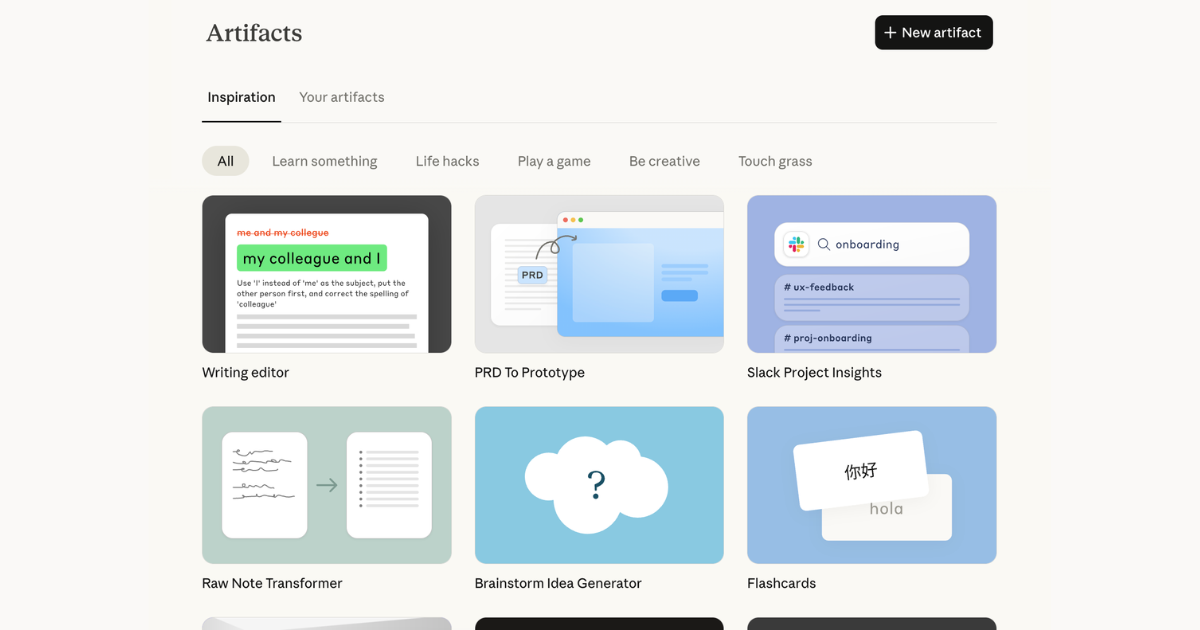
- Artifacts panel :
- When Claude creates something, it appears here, rendered and editable.
What Are Artifacts?
Artifacts are one of Claude’s most useful features, which newcomers always miss. When you ask Claude to write code, create a document, or build a chart, instead of dumping it all in the chat, Claude opens it in a separate panel where you can see it rendered, copy it, download it, or ask Claude to refine it.
Conversations with Claude
The best way to understand Claude is to actually use it. Here are five things to try right now:
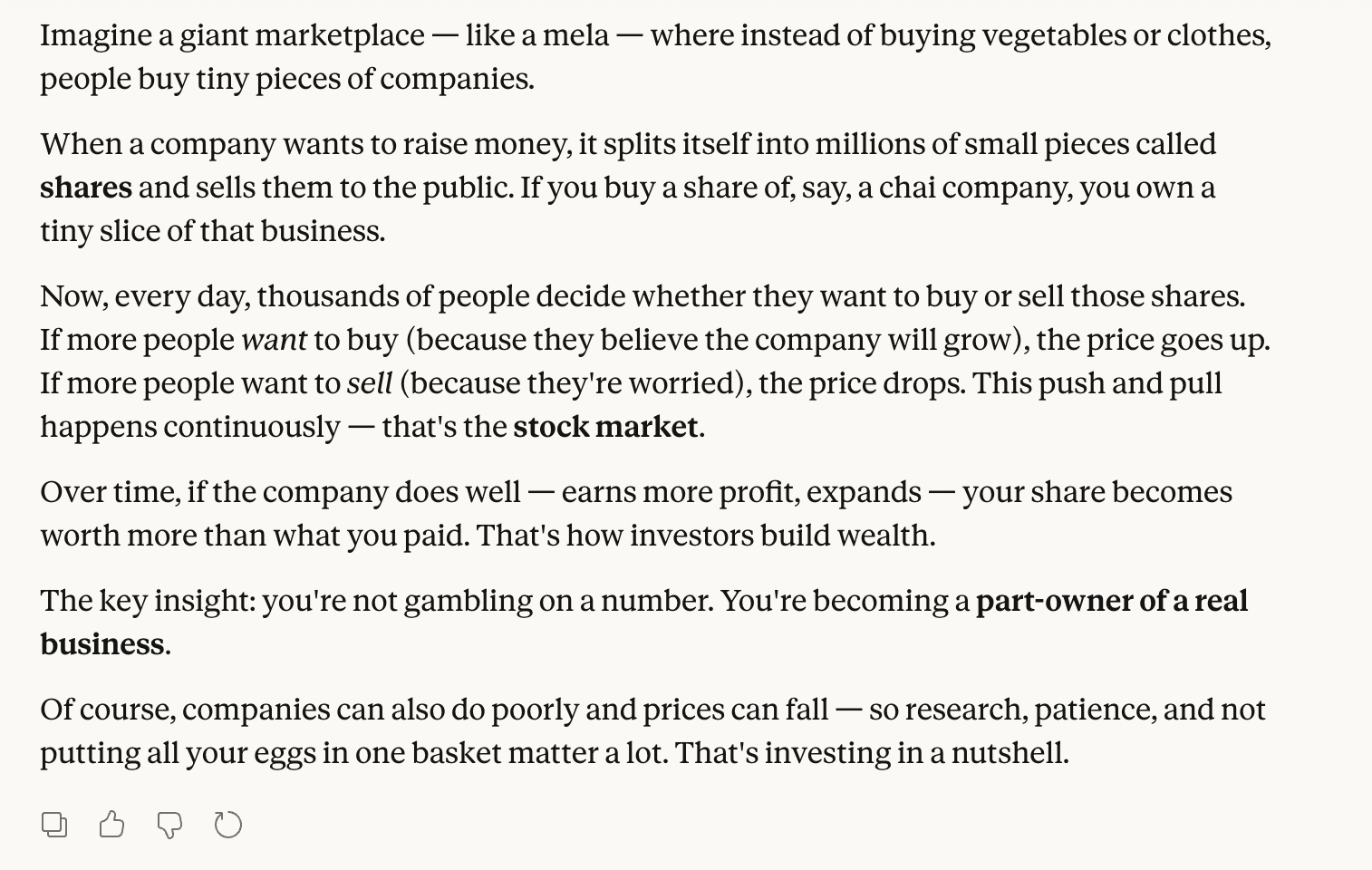
1. Ask Something to Explain Something Complex Simply
Prompt: Explain how the stock market works to someone who has never invested
before. Use an analogy and keep it under 200 words.
Asnwer: See the below chat answer.
2. Upload a Document and Ask Questions
Click the attachment button and upload any PDF, and then ask:
Prompt: Summarise the main points of this document in 5 bullet points. Then tell me the three things I should pay most attention to.
Answer: Please try to upload any PDF and share your feedback in the comment section.
3. Ask It to Write Code
Ask Claude to write any script that you want. I’m trying with Python. You can ask for any language.
Prompt: Write a Python script that reads a CSV file and calculates
the average value of each numeric column. Add comments.
Answer: Below is output from Claude.
import pandas as pd
import sys
import os

def calculate_column_averages(filepath: str) -> dict:
"""
Reads a CSV file and calculates the average value
of each numeric column.

Args:
filepath: Path to the CSV file.

Returns:
A dictionary mapping column names to their averages.
"""

# --- Validate the file path ---
if not os.path.exists(filepath):
print(f"Error: File '{filepath}' not found.")
sys.exit(1)

if not filepath.lower().endswith(".csv"):
print("Warning: File does not have a .csv extension. Proceeding anyway...")

# --- Load the CSV into a DataFrame ---
# pandas automatically infers data types per column
df = pd.read_csv(filepath)

if df.empty:
print("The CSV file is empty.")
return {}

# --- Select only numeric columns ---
# This filters out text/date columns automatically
numeric_df = df.select_dtypes(include="number")

if numeric_df.empty:
print("No numeric columns found in the CSV.")
return {}

# --- Calculate the mean for each numeric column ---
# skipna=True (default) ignores NaN/missing values
averages = numeric_df.mean(skipna=True)

# Convert the pandas Series to a plain Python dict for easy use
return averages.to_dict()


def display_averages(averages: dict) -> None:
"""Prints the column averages in a readable format."""

if not averages:
return

print("\n📊 Column Averages:")
print("-" * 35)

for column, avg in averages.items():
# Format to 4 decimal places for clean output
print(f" {column:<20} {avg:.4f}")

print("-" * 35)


# --- Entry point ---
if __name__ == "__main__":

# Expect the CSV path as a command-line argument
# Usage: pytho
How to run it:
python solution.py your_file.csv
```

**Example output:**
```
📊 Column Averages:
-----------------------------------
age 34.2500
salary 72400.0000
years_experience 6.7500
-----------------------------------
Key design choices:
- Uses
pandas— handles large files efficiently and skips non-numeric columns automatically - Skips
NaNvalues by default so missing data doesn’t break the average - Accepts the file path as a CLI argument so it works for any CSV without editing the script
- Separates logic (
calculate_column_averages) from display (display_averages) for reusability
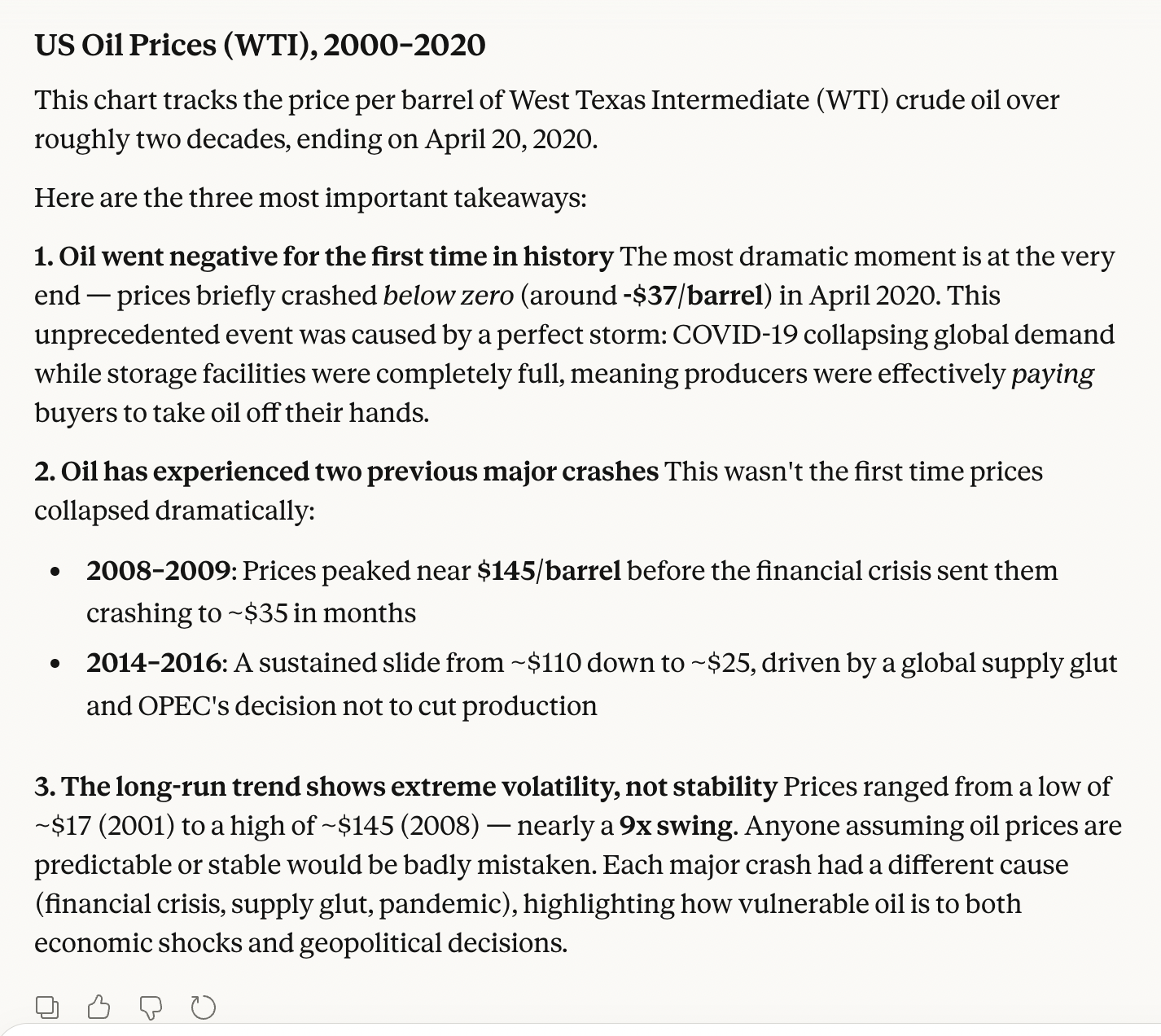
4. Ask It to Analyse an Image
You can ask Claude to analyse the chart or image to get key points and statistics. Upload a screenshot, diagram, or photo and ask:
Prompt: What does this chart show? What are the three most important things I should take away from it?
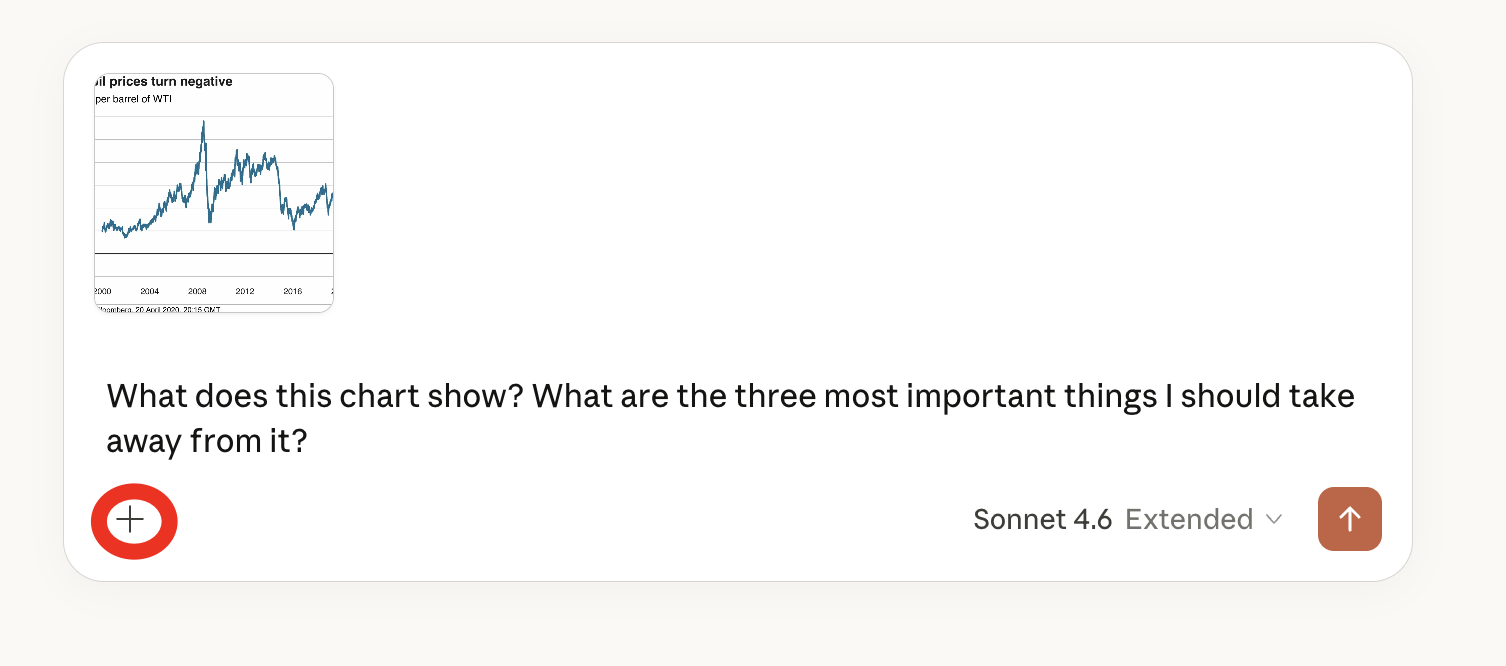
Answer: Below is the answer from claude.ai
5. Ask It a Hard Question and Push Back
You can ask anything to Claude.ai and check what they can suggest.
Prompt: What is the best programming language to learn in 2026? I want a direct recommendation, not a list of options.
Notice how Claude reasons through the answer and gives you a direct recommendation rather than dodging the question. This directness is one of the things developers value most about it.
Things You Should Be Careful About
This is important.
- Claude can give wrong information sometimes if the directions are incorrect
- Sounds very confident, even when the output is incorrect
- Miss context. Sometimes giving such information that is not relevant or asked.
- Sometimes, forgetting past conversation and asking again for the previous content/context.
So always:
- Double-check important things while giving instructions, and read the response correctly.
- Don’t blindly trust it. Always verify before trying or implementing.
What to Learn Next
You now understand what Claude is, which plan to choose, and how the interface works. The next step is learning how to talk to Claude effectively, which means learning prompt engineering.
In the next article in this series, we will try to cover everything. How to write prompts that get Claude to produce exactly what you need, every time.
